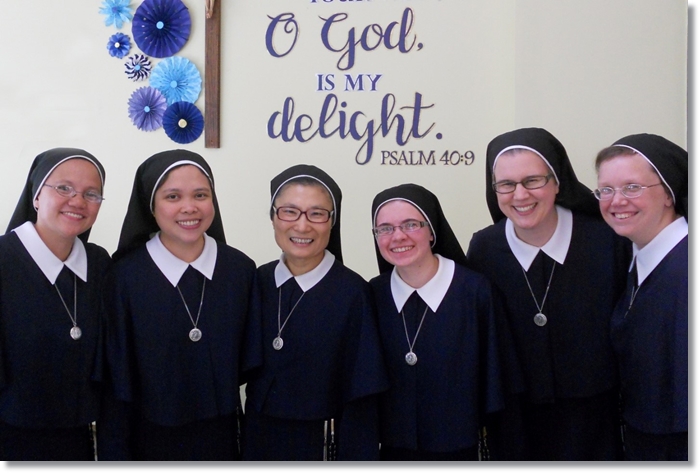
Blessed Ordinary Time from the Parish Visitors of Mary Immaculate!
Recently as I was praying about an upcoming retreat (see details below – skip down if you want:) that we will be hosting on Growing in Holiness during a time of discernment, the Holy Spirit nudged me at these words:

I had been leafing through the gospel according to St. Matthew, with an eye to how Jesus prepared His disciples for mission, noticing a constant refrain of “…and they followed Him.” They followed Him as He taught, as He healed, as He prayed, as He sat down, as He lived each day. This was part of their discernment.
So far in this Vocation Newsletter we’ve looked at what discernment is (listening, recognizing, and responding to God’s voice in your heart) and started exploring different aspects of the daily prayer that keeps your discernment on track. Last month we zeroed in on recollection, keeping our minds and hearts constantly in God’s presence through silence, aspirations, and visual reminders in our physical space. This month we are going to focus on a way of joining Jesus’ disciples as they sit down with Him.
Imagine you’ve made a plan to spend time with Jesus. You set a reminder on your phone, and when it goes off you put away whatever you were working on. You go to a special prayer space with a Bible, a journal, a holy picture, and a comfortable (but not too comfortable:) chair, or to a chapel or Church. You kneel or sit down and make the Sign of the Cross slowly and reverently. Then what???
 call
call
There are many different ways to pray, but when discerners ask about what might be most helpful for them, I generally suggest Lectio Divina (Divine Reading) with the Scriptures.
Lectio Divina
Lectio Divina is an encounter with Jesus through the Scripture – to sit, listen, talk, and be present with Him. There are many different styles of Lectio taught by different Saints and traditions. I’ll share a method I’ve found fruitful, as well as links to some other methods.
The four basic movements of Lectio Divina are commonly known by their Latin names: Lectio (to read), Meditatio (to meditate), Oratio (to pray), and Contemplatio (to contemplate). Many find it helpful to have a little notebook or journal to jot down notes during or after Lectio Divina.
First, choose a passage from scripture. The Gospels are great for Lectio Divina, and I’ve included a few suggested passages below. The daily Mass readings are also a great source of a good-sized “chunk” of Scripture – not too short, but not too long. You will want to read the passage multiple times, but it is up to you if you read it multiple times at the beginning or read it once with each of the four movements.
The first movement, Lectio, is to get familiar with the passage. What’s happening? Are there helpful footnotes in your Bible? At what stage of salvation history does it take place? Are there any words you don’t know or context that is unclear? You may find it helpful at this point to summarize the passage in a couple sentences in your own words.
In Meditatio, the second movement, if you are an imaginative person, it may be helpful to imagine yourself in the scene (for example, as one of the disciples) or as an observer. How do you feel/respond/think as the action takes place. How does this relate to something that has happened in your own life?
Oratio is a time to talk to our Our Lord about your thoughts/experiences/questions from the Meditatio.
Finally, Contemplatio is a loving glance, a silent listening, giving God a space and time to respond with a word, a sense of presence, or any way He sees fit.

Lectio Divina can take different amounts of time. When I first used it, 15-20 minutes was more than sufficient. Recently, it can last much longer, sometimes moving back and forth between the different movements, or skipping some completely. Your prayer life is like your life in general – full of change.
Real-life Lectio Divina
When I was a Junior (temporary professed) Sister, I was part of hosting a discernment process called Samuel Group. One of my roles was to lead a Lectio Divina Reflection on different scriptures that captured the theme of each monthly meeting. The reflection shared here is a part of my sharing on the Call of St. Matthew in the Gospel according to St. Luke. The theme of the meeting that month was the Vocation to Celibacy for the Kingdom. The Lectio and the Meditatio are rather long, so I have summarized them here, but included the full reflection below the signature line of this email.
“After this He went out and saw a tax collector named Levi sitting at the customs post. He said to him, ‘Follow Me.’ And leaving everything behind, he got up and followed Him. Then Levi gave a great banquet for Him in his house, and a large crowd of tax collectors and others were at table with Him.” (Luke 5:27-29)
Lectio: When I first read this Gospel passage, in preparing this meditation, my thought was, “That’s awful short.” In just four sentences St. Matthew (also known as Levi) goes from sitting at his tax collecting post to following Jesus and throwing a great banquet for Him. What a conversion! A tax collector was considered a traitor to his people and a public sinner. No one of any reputation would socialize with him, but we know that Jesus is different.
“Jesus saw a tax collector named Levi sitting at his customs post.” We don’t know anything about Matthew at this moment. We don’t know his state of mind, his detachment, whether he was in consolation or desolation, or whether he had even heard of Jesus or seen Him before. As I meditated on this passage, after making up two or three “back stories” for St. Matthew, I realized that perhaps this was left vague in God’s Divine Providence so that we can each place ourselves in St Matthew’s shoes, with our own back story, and meditate on how we would respond to Jesus’ call.
Meditatio: Jesus saw St. Matthew. We know that Jesus sees things differently than we do. He can see the heart of the person. He saw all of Matthew’s sins and imperfections, but He didn’t look away. He wasn’t disgusted. Jesus looked at Matthew with mercy. This look of Jesus can penetrate our soul, illumine our mind, and speak to our heart. We are simply “at home” when we meet His gaze and hear His call in our hearts.
Jesus saw that Matthew was a tax collector, just as He sees our sins and imperfections. He didn’t call Matthew because Matthew was perfect, but because it was part of His plan of Salvation. Any obstacles we see or unworthiness we feel, are not obstacles to God. He doesn’t call us because we are already Saints, but because He wants to give us the help we need to be the Saints He is calling us to be.
Perhaps Matthew was already feeling some dissatisfaction in his life, so was able to respond immediately when he recognized the Master’s voice that he had been longing to hear. When we free ourselves from attachments, open ourselves to a life of prayer, and cultivate interior indifference, it is easier to respond quickly to the call of Our Lord.
Reflecting on my own call, while preparing this meditation, I recalled my searching. I had a good job as a structural engineer, a loving family that I am very close to, and wonderful faith-filled friends. But something was incomplete. I was searching for a way to give of myself more fully and was attracted to sharing the faith with those who had lost it or had never received it. As I explored many options, from engineering service work to international lay mission opportunities, to religious life, I became more detached from my family and friends with the help of a Spiritual Director. When I finally heard Our Lord’s call, I was ready to follow, although He gave me a bit more time to put my affairs in order than He gave St. Matthew:).
Oratio and Contemplatio: These are rather personal movements and difficult, even impossible at times, to put into words. One possible Oratio would be: I love You, Jesus. Thank-You for seeing me as I am and loving me. Thank-You for reminding me that I don’t need to be perfect to be loved by You or to be Your instrument in the lives of others. Lord, I am feeling restless in an area of my life. Can you please show me if it is a holy restlessness inspired by you?
What’s My Next Step
Choose a time, a place, and a scripture passage – and dive in! If you experience distractions, smile, say a short prayer (“Come, Holy Spirit” is a good one) and return to the Lectio. Make sure you leave time for the Contemplatio at the end. Try writing down a few sentences at the end about your prayer experience.
I’ve included some helpful links below, but don’t make this too complicated. If you have questions or would like to share the fruits of your prayer, please reach out. Do you have any questions about Lectio Divina, your vocational journey, or would you like to talk to a Sister? If so, please click here to fill out our Vocation Inquiry Form.
Upcoming PVMI Discernment Retreats
As you know, the art of discernment, hearing God’s voice and responding to His call, is a many-faceted way of life. The Parish Visitors of Mary Immaculate are offering two weekend retreats for young women to help you in discernment over the upcoming months. Over Presidents’ Day weekend (Feb 14-15) at Marycrest, our Motherhouse in Monroe, NY, young women will explore Growing in Holiness – Being with Jesus during Discernment. This retreat will focus on ways to grow in holiness by spending time with Jesus, as the disciples did.
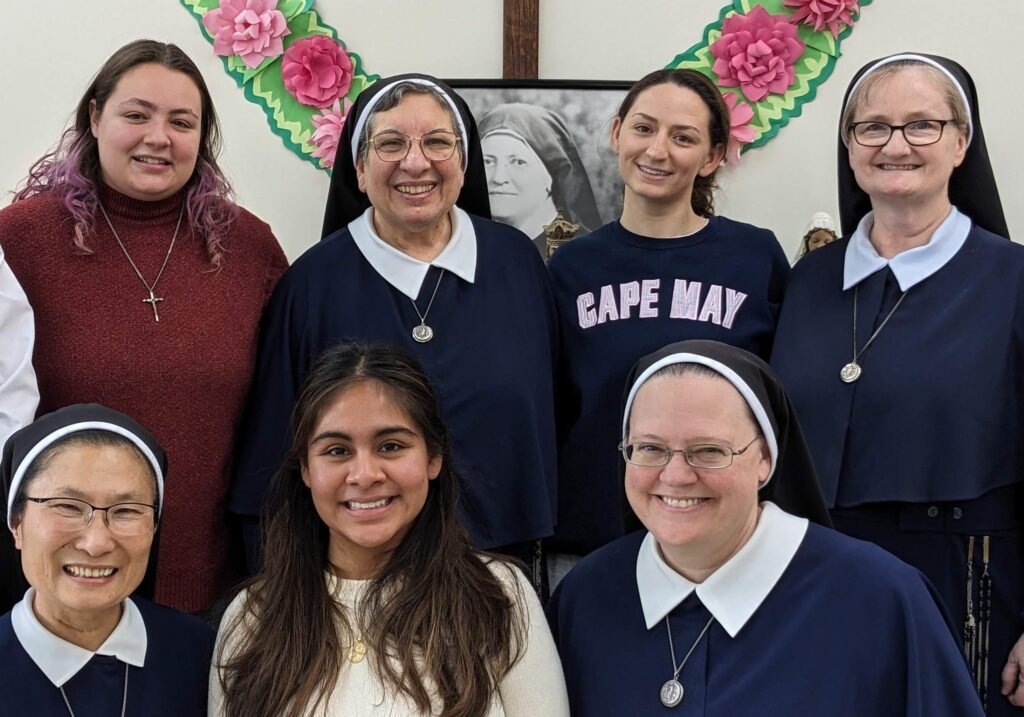
During the Easter Season, April 18-19, at Our Lady of Providence PVMI Convent in Warren, OH, we will offer a “Where is God Calling Me?” basics of discernment retreat. This retreat will focus on what discernment is and some daily helps to discernment, including particular types of prayer that are helpful.
Would one of these retreats be helpful for you? We would love to help you on your vocational journey. Also, could you help us spread the word? Do you know any young Catholic women who would be interested in one or both of these retreats? I’ve attached the flyers and here are the registration links, as well.
Feb 14-15 Retreat: https://forms.gle/bX8CByj5Ck8mddTg6
April 18-19 Retreat: https://forms.gle/TFEt86iBz6bTTDXy6 (Limited Space)

Please pray for many young women to answer God’s call to grow closer to Him through discernment. You are in my prayers as well!
In the joy of Christ,
Sr. Theresa Marie, pvmi
Vocation Director
Parish Visitors of Mary Immaculate
845-542-1086
“We are destined to be great saints if we make complete use of grace.” ~Servant of God, Mother Mary Teresa Tallon, PVMI
http://www.parishvisitorsisters.org
fb: parishvisitorsofmaryimmaculate
instagram: @parishvisitorsisters
Some Lectio Methods:
Look To Him and Be Radiant (designed for youth, but helpful at any age)
Look To Him and Be Radiant for groups (designed for youth, but helpful at any age)
Institute for Catholic Liberal Education (helpful note guidelines if you like formal notes)
Group method with a Benedictine Slant
Accepting the Embrace of God (a more detailed Benedictine explanation)
Some Suggested Scripture Passages:
Mt 14:22-33 (Walking on Water)
Luke 21:1-4 (The Widow’s Mite)
1 Samuel 1:1-19 (Samuel’s Family Background)
Matthew 18:21-35 (Parable of the Unmerciful Servant)
Mt. 6:25-34 (Do not worry or be anxious)
Mt 19: 16-30 (The Rich Young Man)
1 Samuel 3:1-21 (The Call of Samuel)
Lk 1:26-38 (The Annunciation)
Extended version of the Real-Life Lectio Divina:
“After this He went out and saw a tax collector named Levi sitting at the customs post. He said to him, ‘Follow Me.’ And leaving everything behind, he got up and followed Him. Then Levi gave a great banquet for Him in his house, and a large crowd of tax collectors and others were at table with Him.” (Matthew 5
Lectio: When I first read this Gospel passage, in preparing this meditation, my thought was, “That’s awful short.” In fact, I called Sr. Clare to make sure it was the right passage! In just four sentences St. Matthew (also known as Levi) goes from sitting at his tax collecting post to following Jesus and throwing a great banquet for Him. What a conversion! A tax collector was considered a traitor to his people and a public sinner. No one of any reputation would socialize with him, but we know that Jesus is different. Let’s explore how this conversion came to pass.
The story starts, “After this, (Jesus) went out.” Jesus had just healed the paralyzed man who was lowered through the roof of the house because there were so many people crowed around Jesus. Perhaps St. Matthew even saw the man walking out of the house, carrying his stretcher. As Jesus left the house, you can imagine that the crowd that must have been surrounding Him. In one of his many reflections on this Gospel passage (to which my reflections owe a large debt), Pope Francis says that he even doubts that St. Matthew would have been able to hear Jesus due to the noise of the crowd.
At this point, Matthew enters the story. “Jesus saw a tax collector named Levi sitting at his customs post.” We don’t know anything about Matthew at this moment. We don’t know his state of mind, his detachment, whether he was in consolation or desolation, or whether he had even heard of Jesus or seen Him before. As I meditated on this passage, after making up two or three “back stories” for St. Matthew, I realized that perhaps this was left vague in God’s Divine Providence so that we can each place ourselves in St Matthew’s shoes, with our own back story, and meditate on how we would respond to Jesus’ call.
Meditatio: Jesus saw St. Matthew. We know that Jesus sees things differently than we do. He can see the heart of the person. He saw all of Matthew’s sins and imperfections, but He didn’t look away. He wasn’t disgusted. Jesus looked at Matthew with mercy. This look of Jesus can penetrate our soul, illumine our mind, and speak to our heart. We simply know that He is calling us. It cannot be explained. It doesn’t need words. We are simply “at home” when we meet His gaze and hear His call in our hearts.
Jesus saw that Matthew was a tax collector, just as He sees our sins and imperfections. He didn’t call Matthew because Matthew was perfect, but because it was part of His plan of Salvation. Any obstacles we see or unworthiness we feel, are not obstacles to God. He doesn’t call us because we are already Saints, but because He wants to give us the help we need to be the Saints He is calling us to be.
Jesus called Matthew at his place of work. It was just one more day at the office for St. Matthew…until everything changed. Jesus calls us in our labors, in conversations with friends, wherever we are.
Jesus said “Follow Me. And leaving everything behind, he got up and followed Him.” The literal translation says that Matthew “rose”… “and was following Him.” Matthew rose, just as the paralyzed man rose from the stretcher, just as Jesus rose from the dead. After Jesus looked at Him with mercy and called him, Matthew couldn’t stay as he had been before. He was lifted up and he was changed. He no longer needed the material wealth. He was glad to be following Jesus. We also are changed when Christ calls us. We are lifted up and are glad to be following Jesus.
Perhaps Matthew already was feeling some dissatisfaction in his life, so was able to respond immediately when he recognized the Master’s voice that he had been longing to hear. When we free ourselves from attachments, open ourselves to a life of prayer, and cultivate interior indifference, it is easier to respond quickly to the call of Our Lord.
Reflecting on my own call, while preparing this meditation, I recalled my searching. I had a good job as a structural engineer, a loving family that I am very close to, and wonderful faith-filled friends. But something was incomplete. I was searching for a way to give of myself more fully and was attracted to sharing the faith with those who had lost it or had never received it. As I explored many options, from engineering service work to international lay mission opportunities, to religious life, I became more detached from my family and friends with the help of a Spiritual Director. When I finally heard Our Lord’s call, I was ready to follow, although He gave me a bit more time to put my affairs in order:).
To prepare for a call, God often gives a person some signs of restlessness in their life – a greater attraction to prayer and the sacraments, a sense of the lack of importance of possessions, a desire to do something beautiful for God, for building up the Heavenly Kingdom, even of leaving everything behind for God. These can be signs of a call to the joy, love, and freedom of an undivided Heart.
So, we left St. Matthew following Jesus. “Then (he) gave a great banquet for (Jesus) in his house, and a large crowd of tax collectors and others were at table with them.” Following Jesus draws others to follow Jesus. St. Matthew drew many tax collectors and others to Jesus. A call is not given just for me, but draws me out of myself, to see as Jesus sees, to look with a gaze of merciful love as He does, and to share the Good News even to the ends of the earth.
That is the end of this Gospel story, but certainly not the end of the story of St. Matthew. Like all of us, the initial “yes” to God’s call is just the beginning. we are called to grow day by day in great intimacy with Him, motivated by love, and knowing that His promises for this life “a hundred times more now in this present age: houses and brothers and sisters and mothers and children and lands, with persecution” are merely a foretaste of His promise for “eternal life in the age to come.”